

How To Repair Broken Stair Stringers
The most mutual problems with stairs and staircases are more often than not squeaks and loose or broken parts. In this commodity and the articles listed peak right, you'll discover helpful information for repairing these kinds of issues. For information on fixing patio steps, please see Repairing Physical Patios & Steps.
Fixing Squeaky Stairs
Most steps in older homes creak and squeak underfoot because the wood has stale and shrunk over time. Squeaks in stairs are usually caused by a loose tread rubbing confronting a riser or a stringer when the stair is stepped on.
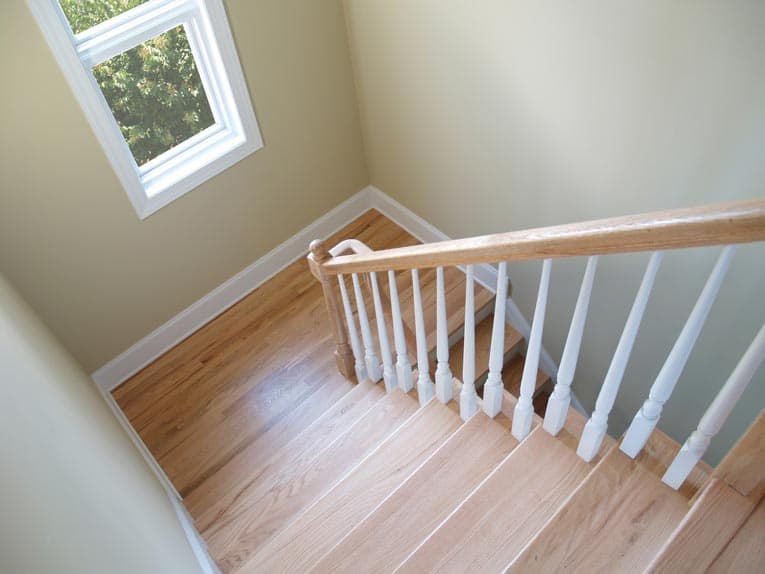
Treads can become loose when wood shrinks or when supporting blocks or nails work loose. This is commonly non a problem unless the parts go very loose or the creaking indicates that a section of the stairway is nearing the breaking betoken.
There are two approaches to fixing squeaky stairs-from below the stairs or from higher up. It's preferable if yous tin can fix them from beneath because your repair is less likely to prove.
One time y'all discover the source of the dissonance, you can usually ready it relatively easily. If the noise comes from the spot where your foot meets the tread, concentrate your repair efforts there.
If the noise comes from 1 side when you lot footstep in the center or if it comes from the rear of the tread when you step at the front, the chances are pretty practiced the entire tread is moving or deflecting.
If you're concerned nigh the noises, start by investigating the source of the sound. Stairs with open undersides (such equally when basement stairs or closets are built below) make this chore easier. Where the underside is not accessible, yous may have to pull downwards a finished ceiling underneath to get a proficient await.
Before making any repairs, try lubricating the parts with talcum powder or powdered graphite to reduce the friction where the parts rub together. Forcefully accident the powder into the joints, especially where the backs of the treads see the risers. If this doesn't help, you lot'll need to take on a footling carpentry work.
Bank check that the woods wedges, used to lock the treads into their mortised slots, haven't worked loose or fallen out. If they have, glue them dorsum in place and tap them tightly home.
Blocks under the treads where they run across each riser too tin fall abroad. If so, nail and reglue them besides.
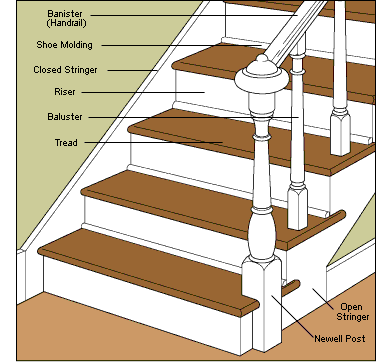
Look for longitudinal splitting or cracks across the width of the stringers, which carry the treads.
Also check the vertical plumb and horizontal level of the major parts to determine if the stairs are leaning in any particular direction-the noises you lot hear could signal that the construction is moving or in danger of collapsing.
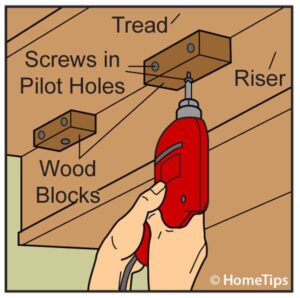
If yous can get at the stairs from underneath, you tin utilize wedges, brackets, or forest blocks to secure the treads to the risers. (Wear eye protection to proceed sawdust and other debris from getting into your optics.)
Glue and spiral forest blocks nether the tread and against the riser. Be sure non to drive the screws through the tread's surface.
If you don't have admission from beneath, you'll have to work from in a higher place.
To forbid the wood from splitting, drill pilot holes before inserting nails or screws. Counterbore the holes if you program to make full them with dowel plugs.
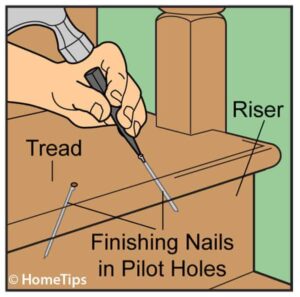
Otherwise, set the heads slightly below the surface and cover the holes with matching wood putty.
Because they anchor the handrail and must exist able to have the weight and stress routinely imposed on them, stair newels must be well secured to the staircase or floor framing.
When one becomes loose, and you lot can't see its anchoring betoken under the stairs, it may be necessary to work through a ceiling to get at the underside or remove a piece of flooring on a stair landing in order to brand the repair.
Repairing a Broken Stair Tread
Individual treads can be replaced when absolutely necessary. Depending on how the staircase is built, this tin exist uncomplicated or information technology can be far besides complicated for an amateur to tackle. If you tin can, try to repair the tread without removing it. If this proves incommunicable, consider your options carefully:
If the treads are "open up" on both sides and resting atop the stringers and the handrail balusters aren't attached to the steps, it might crave just pulling up the damaged tread and removing the nails that concord information technology to the risers to a higher place and below it. New, unfinished hardwood treads can be easily cut to fit.
However, if the treads are glued into mortises cut into the stringers on both sides (a "closed" run), or if they are held in place by balusters mortised into each stride, removing a single tread could entail disassembling (and peradventure destroying) much of the staircase in the procedure. Before you attempt this work, get an gauge from a professional with proven experience in stair building and repair.
Tightening a Loose Baluster
Methods for tightening loose balusters in banisters usually involve inserting wedges or securing loose parts with screws.
Use a syringe-blazon glue bottle to squeeze woods gum into the baluster sockets at superlative and bottom. If you're using screws, drill airplane pilot holes for them to prevent the forest from splitting. Exist sure to encompass any visible screw holes with forest plugs.
If you're using nails, drill airplane pilot holes sized for small (2d to 4d) finishing nails through the baluster ends and into the wood. Use a smash gear up to coffin the nails into the woods so fill the smash holes with wood putty.
Repairing a Broken Baluster
If y'all can't re-glue a split baluster, carefully saw through it and remove both parts by "working" them out of their sockets.
Purchase or make a replacement baluster and cut it and then that it is 1/four to 3/viii inch longer than the original.
Diameter the existing top pigsty in the handrail one/2 inch deeper, merely take care not to bore through the acme of the rail.
You lot should be able to insert the baluster into the top hole far plenty to allow the lesser end to drop into its socket. Mucilage and smash the replacement into the sockets.
Fixing a Loose Rail or Post
Because they anchor the handrail and must exist able to take the weight and stress routinely imposed on them, stair newels must be well secured to the staircase or floor framing.
When one becomes loose, and you can't meet its anchoring point under the stairs, it may be necessary to work through a ceiling to become at the underside or remove a piece of flooring on a stair landing in social club to make the repair.
On older stairs, the base of a newel is oftentimes doweled or mortised and glued in place. Modernistic stairs may have bolts, lag screws, or other conventional hardware to agree the newel.
Once y'all've located the problem, reinforce the newel with new hardware. Use hefty connectors that can hold their own confronting everyday employ, and be sure the newel is vertically plumb when yous fasten it permanently in place.
If you have wall-mounted mitt railings, be certain they are soundly secured to the wall-loose railings are a serious hazard.
Source: https://www.hometips.com/repair-fix/stairs-squeaky.html
0 Response to "How To Repair Broken Stair Stringers"
Post a Comment